
中文
中文
With the rapid development of quantum technologies, quantum computing, quantum sensing, quantum control, and quantum error correction have become key areas of international frontier research. As quantum systems continue to advance toward larger scales and higher precision, understanding and suppressing quantum errors, achieving high-fidelity quantum control, and using artificial intelligence to enhance the characterization, optimization, and error correction of quantum systems have become critical scientific and technological issues shared by fundamental research and engineering applications.
Against this background, from December 5 to 9, 2026, the Shenzhen International Quantum Academy, together with scholars from Tsinghua University, The Hong Kong Polytechnic University, Harbin Institute of Technology (Shenzhen), and other universities and research institutions, will organize the international academic conference “Quantum Errors, Sensing, Control and Correction in the AI Era: Principles and Engineering” (Q-ESCAPE) in the Hetao Shenzhen-Hong Kong Science and Technology Innovation Cooperation Zone, Shenzhen.
Conference Topics
The conference will focus on frontier advances in quantum information science and quantum technologies, covering quantum computation and simulation, quantum control and error correction, quantum sensing and metrology, intersections of artificial intelligence and quantum technologies, quantum hardware platforms, and quantum error mechanisms and characterization. It aims to connect fundamental theory, experimental research, and engineering implementation.
Bringing together experts and scholars from leading universities, research institutions, and industry in China and abroad, the conference will feature invited talks, contributed oral presentations, short talks, and poster sessions. Participants will share their latest research results and promote interdisciplinary integration across research directions, technology platforms, and academia–industry collaboration, with in-depth discussions on frontier scientific questions and key engineering challenges in quantum technology development.
Invited Speakers
The conference has invited renowned experts and scholars from leading universities and research institutions worldwide. Confirmed invited speakers include:
Herschel Rabitz — Princeton University
Professor Rabitz has long worked on quantum optimal control and controlled quantum dynamics. He is one of the founding figures of modern quantum optimal control.
Augusto Smerzi — Shenzhen Technology University
A theoretical physicist, Professor Smerzi has long worked on quantum metrology, quantum sensing, and many-body entanglement. He is a leading representative scholar in international quantum metrology and quantum sensing.
Seigo Tarucha — RIKEN
An experimental quantum physicist, Professor Tarucha has long worked on semiconductor quantum dots, spin qubits, and high-fidelity quantum control. He is a senior leading figure in semiconductor spin quantum computing.
Mauro Paternostro — University of Palermo
A scholar in quantum information and quantum optics, Professor Paternostro has long worked on open quantum systems and quantum thermodynamics, and serves as Editor-in-Chief of Quantum Science and Technology. He is a senior and influential scholar in quantum information science.
John Gough — Aberystwyth University
Professor of theoretical and mathematical physics and Head of the Department of Physics, Professor Gough has long worked on open quantum systems, quantum feedback networks, quantum filtering, and quantum control. He is a leading expert in quantum feedback control and the mathematical theory of open systems.
Joonwoo Bae — Korea Advanced Institute of Science and Technology (KAIST)
A quantum information theorist, Professor Bae works mainly on quantum state discrimination and quantum information processing. He is an active mid-career scholar in quantum information theory in Korea.
Adolfo del Campo — University of Luxembourg
A theoretical quantum physicist, Professor del Campo has long worked on nonequilibrium quantum dynamics, shortcuts to adiabaticity, and quantum control. He is an important representative scholar in quantum control and nonequilibrium quantum dynamics.
Felix Motzoi — Forschungszentrum Jülich
An expert in quantum control and quantum optimization, Dr. Motzoi works on qubit control, error suppression, and automated optimization. He is one of the key originators of the DRAG quantum control method.
Ilya Kuprov — Weizmann Institute of Science
An expert in theoretical and computational spin dynamics, Professor Kuprov works on magnetic resonance, quantum optimal control, and machine learning. He is internationally known for work at the intersection of spin dynamics and quantum control.
Yvonne Gao — National University of Singapore
An associate professor at NUS and Yale PhD, Professor Gao has long worked on superconducting quantum circuits, bosonic quantum error correction, and scalable quantum computing hardware. She is an influential emerging leader in the field.
Conference Information
Date: December 5–9, 2026
Venue: Conference Room, Ground Floor, State Assets and SOEs Innovation Center
No. 3 Taohua Road, Hetao Shenzhen-Hong Kong Science and Technology Innovation Cooperation Zone, Futian District, Shenzhen, China
Organizer: Shenzhen International Quantum Academy (Shenzhen Base of Hefei National Laboratory)
Co-organizers: IOP Publishing; Shenzhen-Hong Kong Science and Technology Innovation Cooperation Zone Development Co., Ltd.
Supporting Organizations: QuantumCTek Co., Ltd.; Zhuhai Donglai Technology Co., Ltd.; Hubei Vector Singularity Technology Co., Ltd.; Chengdu Zhongweidaxin Technology Co., Ltd.
Steering Committee: Dapeng Yu; Augusto Smerzi
Scientific Committee: Xiuhao Deng; Yu He; Augusto Smerzi; Daoyi Dong; Renbao Liu; Haidong Yuan; Rebing Wu
Organizing Committee: Xiuhao Deng; Junkai Zeng; Yuanhao Dong; Yueyue Zhang; Yue Zhang; Georg Engelhardt; Haoyu Guan
Partner Journals: Quantum Science and Technology; Future Quantum
Call for Abstracts
A limited number of contributed talk slots will be available. Abstracts not selected for oral presentation may be presented as posters. The poster session will be carefully organized and will include five-minute flash talks, ample time for on-site discussion, and a Best Poster Award.
Poster size: 80 cm in width and 90–120 cm in height.
Abstract submission deadline: October 31, 2026
Abstract submission link: https://scqc-siqse.feishu.cn/share/base/form/shrcnY0cnmaEocpi0eHMe3elble
Registration
Faculty members and students in relevant fields are welcome to visit the conference website through “Read more” and register for the conference.
Registration link: https://scqc-siqse.feishu.cn/share/base/form/shrcntO4SqbHW2eXAg3VEh8Ni6t

Payment information:
For international payments, please pay to the PayPal account 1053652844@qq.com and indicate your name in the payment note. Please keep the receipt for registration.
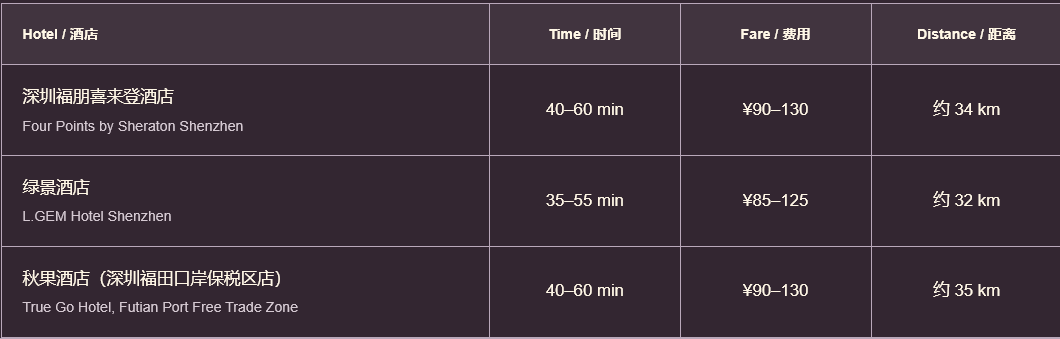
Accommodation:
Contact
Conference Secretariat: conference@iqasz.cn
Urgent matters: dongyh@iqasz.cn
Sponsorship: dengxiuhao@iqasz.cn