
中文
中文
Recently, under the leadership of Academician Dapeng Yu, Researcher Yuan Xu and Researcher Song Liu from the Shenzhen International Quantum Academy (IQASZ), in collaboration with Professor Jing Shu from the Peking University (PKU), have achieved significant experimental progress in the search for dark photon dark matter. The team developed a detection scheme for dark photon dark matter using four-component cat states within high-quality-factor niobium superconducting microwave resonators, realizing quantum-enhanced dark matter searches and laying an important technical foundation for next-generation high-sensitivity dark photon dark matter search experiments. The work was published on April 29, 2026 on Physical Review Letters as a Letter entitled “Quantum-Enhanced Dark Matter Search Using Cat States”.
Dark matter is a significant component of the universe. Although its existence has been confirmed by numerous observational evidence from astronomy and cosmology, its microscopic nature remains one of the great mysteries in modern physics. There are multiple theoretical models for the fundamental properties of dark matter, with the mass of possible dark matter candidates spanning nearly 100 orders of magnitude. Among these, ultralight wavelike dark matter, such as dark photons and axions, has received increasing attention in recent years. Superconducting microwave resonators have been proposed as important tools for detecting such ultralight dark matter. However, conventional detection schemes are limited by standard quantum limit noise, which greatly restricts the sensitivity of dark matter detection -- this is also a significant challenge in the field of dark matter search experiments.
The research team developed a quantum-enhanced dark matter detector based on high-quality-factor niobium superconducting microwave resonators to detect ultralight wavelike dark photon dark matter permeating space. When the mass of the dark photon matches the resonant frequency of the detector, the dark photon will convert into standard model photons in the resonator with a probability proportional to the kinetic mixing angle, thereby being detected. By measuring the photon production rate in the resonator, the constraint on the kinetic mixing angle of the dark photon can be derived.
This study proposed an experimental detection scheme for dark photon dark matter using four-component cat states, achieving quantum-enhanced high-sensitivity searches for dark photons. The modulo-4 parity property of the four-component cat state enables the detector to distinguish between photon production signals and single-photon loss errors in the resonator, thereby improving the signal-to-noise ratio of photon detection. In the experiment, the research team successfully prepared high-fidelity four-component cat states as the initial detection states and performed systematic characterization of the detector using repeated quantum non-demolition parity measurements and the hidden Markov model analysis. By increasing the mean photon number of cat states, the experiment demonstrated a photon production rate up to 8.1 times higher than that of the vacuum state, significantly enhancing the efficiency of dark photon detection.
After the detector characterization, the team conducted dark photon search experiment. By measuring the coherent integrated signal of dark photon, they achieved an unprecedented constraint on the dark photon kinetic mixing angle of 7.32×10^{-16} near 6.44 GHz. Furthermore, the team developed an in situ frequency-tuning method based on detuned sideband driving and conducted frequency scan search for dark photons. By combining the photon production rates measured at different frequencies to further suppress the background noise, they realized high-sensitivity dark matter search over a frequency range of 100 kHz, obtaining constraints on the dark photon kinetic mixing angle at the 10^{-16} level -- more than one order of magnitude better than previously reported results. This achievement is expected to further promote the important application and development of quantum-enhanced precision measurement technology in cutting-edge fundamental physics fields such as next-generation dark matter search.
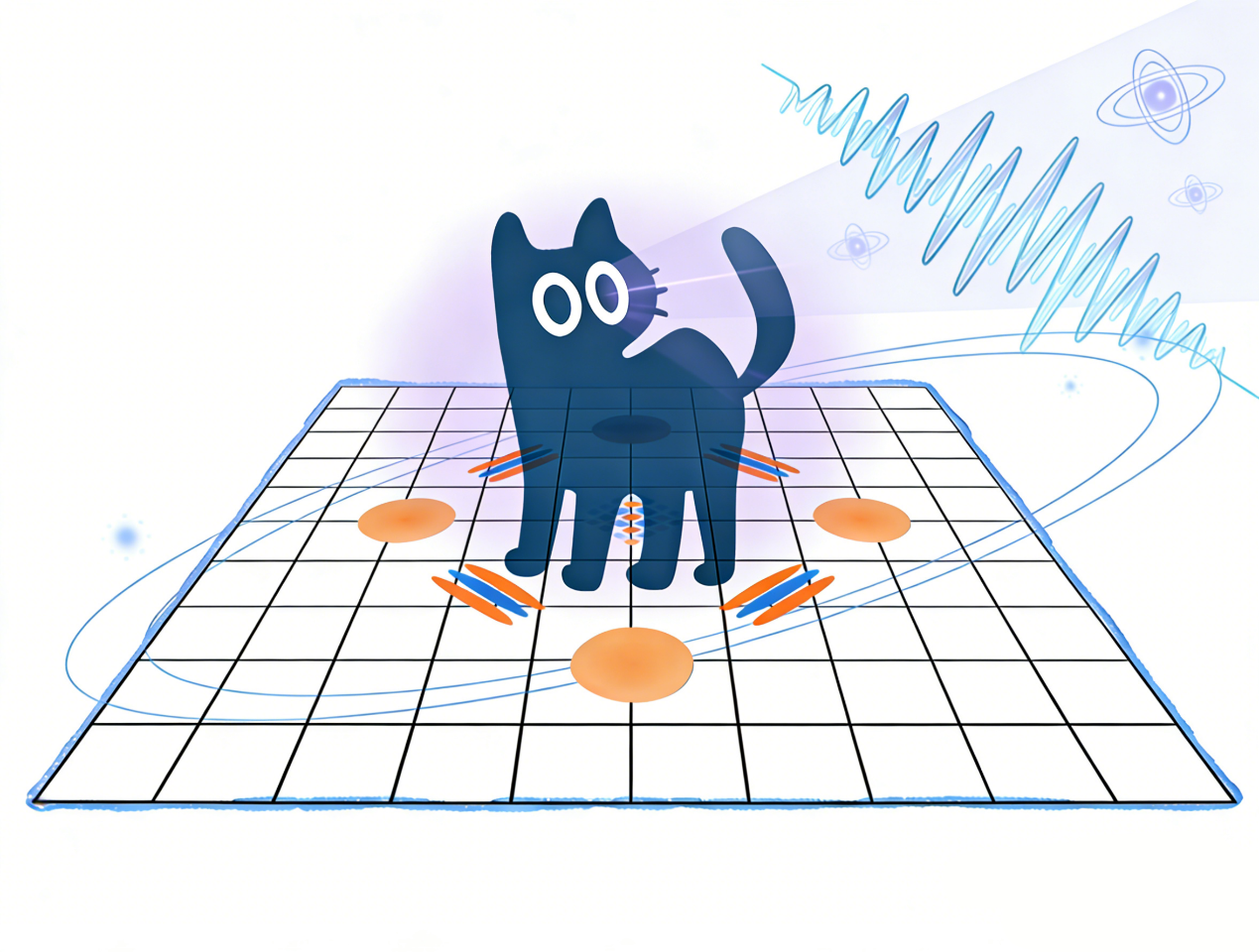
Fig. 1. Cartoon schematic for quantum-enhanced dark photon dark matter searches based on four-component cat states.
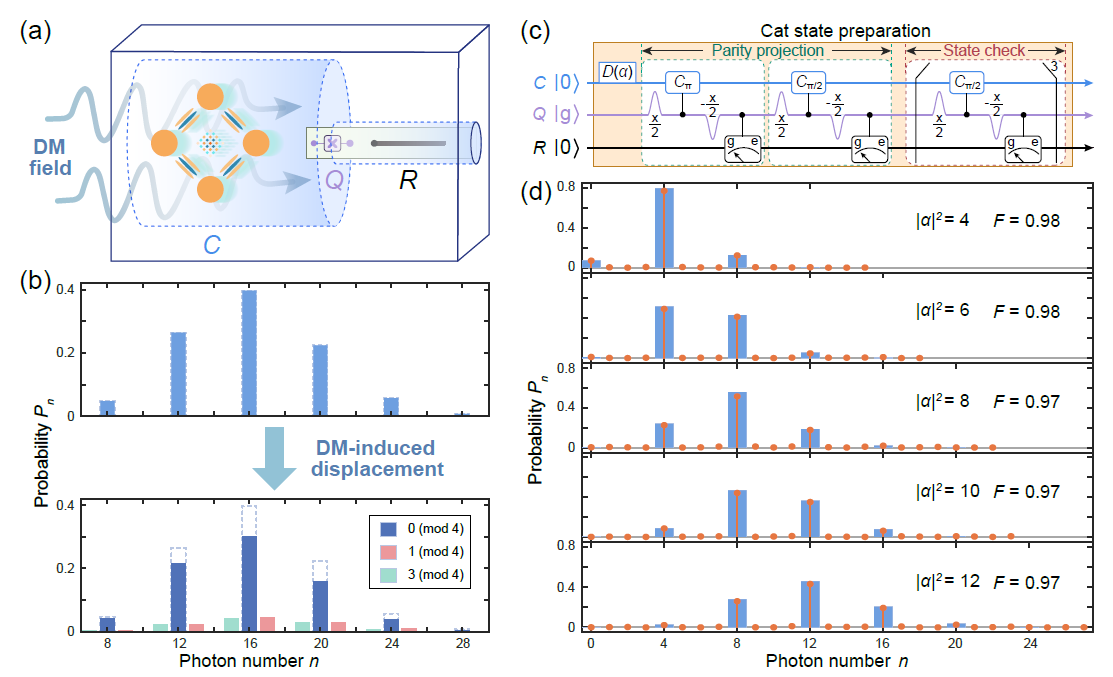
Fig. 2. Scheme for the dark matter detector and preparation for four-component cat states.
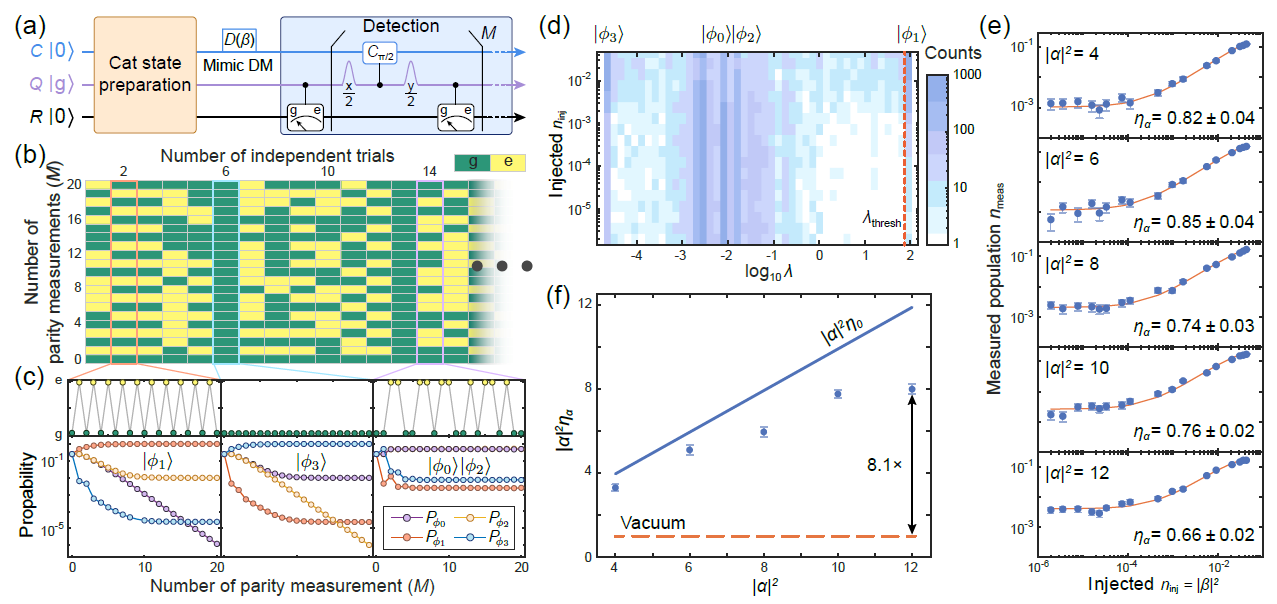
Fig. 3. Characterization of the dark matter detector and enhancement of the total detection efficiency.
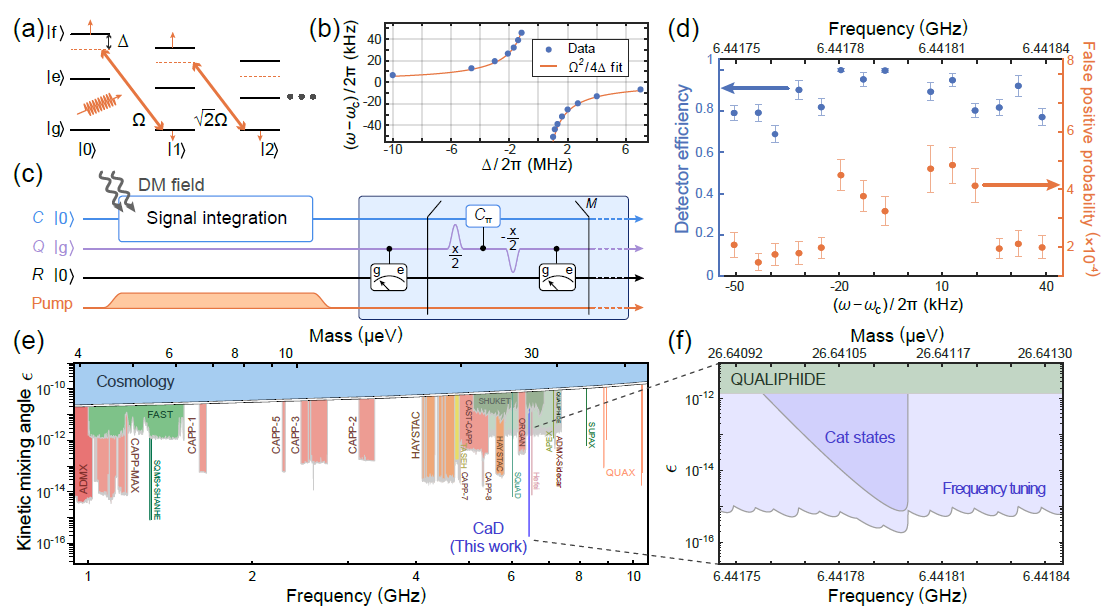
Fig. 4. Frequency scan search for dark matter and the new constraint on the kinetic mixing of dark photons reported in this work.
In this study, Associate Researcher Pan Zheng from IQASZ, Yanyan Cai (PhD candidate at IQASZ/SUSTech), and Bin Xu (postdoctoral researcher at PKU) are the co-first authors of the paper. Academician Dapeng Yu, Researcher Yuan Xu and Researcher Song Liu from IQASZ, and Professor Jing Shu from PKU are the co-corresponding authors. Other co-authors include Associate Researcher Xiaowei Deng, Associate Researcher Ling Hu and Assistant Researcher Zhongchu Ni from IQASZ, Shengcheng Wen (master student at IQASZ/SUSTech), Libo Zhang (PhD candidate at IQASZ/SUSTech), Jiasheng Mai (PhD candidate at IQASZ/SUSTech), Senior Engineer Lin Lin from PKU and Yanjie Zeng (PhD candidate at ITP, CAS). The research received support from the National Natural Science Foundation of China, the Hefei National Laboratory, the department of Science and Technology of Guangdong Province and the Shenzhen Municipal Science, Technology, and Innovation Bureau.
Paper Link:
https://journals.aps.org/prl/abstract/10.1103/wbhn-v1sw