
中文
中文
From September 19 to 20, the 2026 Phoenix Summit on Quantum Information Physics "Integrated Photonic Quantum Devices and Measurement" was successfully held in Yinchuan, Ningxia. The forum was co-hosted by the Shenzhen International Quantum Academy and Ningxia University, organized by the School of Physics of Ningxia University, co-organized by the Ningxia Physical Society and the Shenzhen Quantum Information Society, and supported by Shenzhen Huaxin Quantum Security Technology Co., Ltd.
Dozens of experts from top research teams of more than ten institutions, including Peking University, the University of Science and Technology of China, Harbin Institute of Technology (Shenzhen), Nanjing University, Xi'an Jiaotong University, Sun Yat-sen University, Shandong University, The Chinese University of Hong Kong (Shenzhen), Nanjing University of Aeronautics and Astronautics, Shanghai University, the Institute of Semiconductors of the Chinese Academy of Sciences, the National Innovation Institute of Defense Technology of the Academy of Military Sciences, the Shenzhen International Quantum Academy, and Ningxia University, gathered in Yinchuan, Ningxia, to exchange views on key technical issues in the field of integrated photonic quantum devices and measurement, and to discuss the frontiers of quantum science and technology.
The forum opened on the morning of September 19. Feng Xiufen, member of the Standing Committee of the Party Committee and Vice President of Ningxia University; Yu Dapeng, Academician of the Chinese Academy of Sciences and President of the Shenzhen International Quantum Academy; and Zhao Wenxiang, second-level inspector of the Ningxia Hui Autonomous Region Association for Science and Technology, delivered speeches at the opening ceremony. Professor Bai Zhiqiang, Deputy Secretary of the Party Committee and Vice President of the Shenzhen International Quantum Academy, presided over the opening ceremony.
Yu Dapeng, Academician of the Chinese Academy of Sciences and President of the Shenzhen International Quantum Academy, reviewed the previous themes and development history of the Phoenix Summit Forum. He pointed out that integrated photonic quantum devices are a strategically important and leading direction in the current field of quantum information, serving as a key breakthrough for advancing quantum technology from basic research to engineering and industrialization. He hoped that attending scholars would cherish the opportunity for exchange, deepen discussions, strengthen collaboration to achieve "strong alliances and complementary advantages," overcome key core technologies, and make greater contributions to the innovative development of the country's quantum information technology. At the same time, he expressed gratitude to the Ningxia Autonomous Region government and Ningxia University for their strong support of the forum, and stated that the Shenzhen International Quantum Academy would continue to deepen cooperation with Ningxia University in the field of physics through industry-university-research collaboration, jointly contributing strategic strength to the country's quantum science and technology cause.
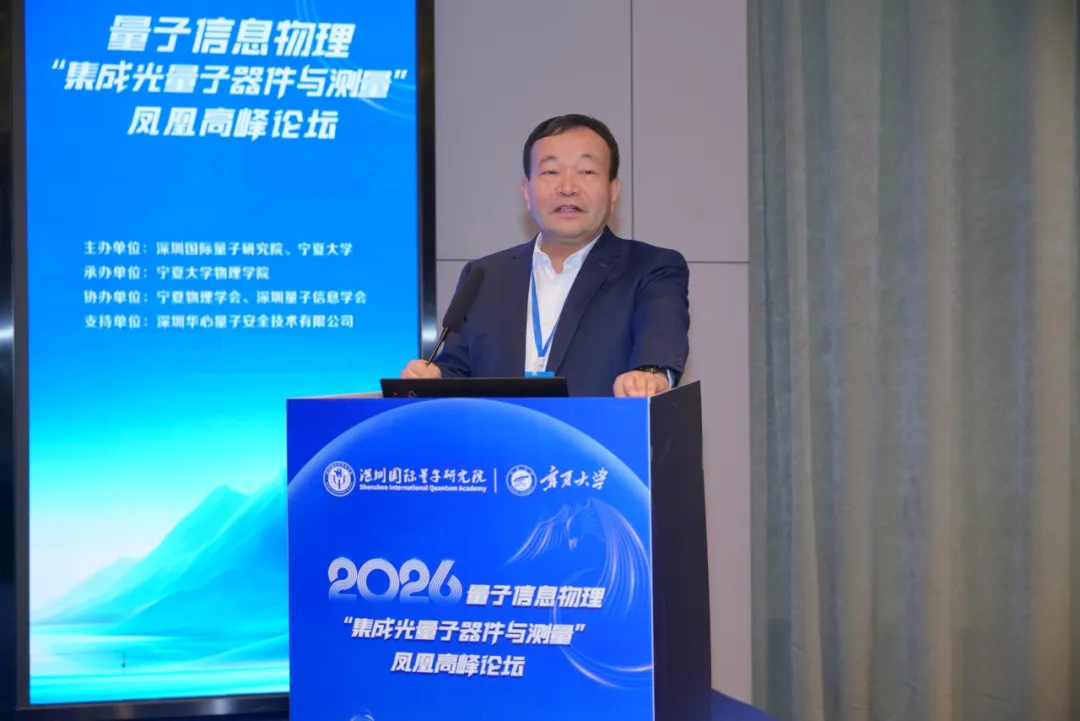
Academician Yu Dapeng, President of the IQASZ
Feng Xiufen, member of the Standing Committee of the Party Committee and Vice President of Ningxia University, pointed out that as a provincial-ministerial co-constructed institution and a "Double First-Class" university, Ningxia University has always placed the development of basic disciplines in a strategic position to serve national strategies and regional development. Since its establishment in 1958, the physics discipline has been built into a national first-class undergraduate program and possesses the authority to confer doctoral degrees in the first-level physics disciplines, making it the main force of basic research and an important source of scientific and technological innovation. She expressed gratitude to the experts and scholars for their strong support to Ningxia University and warmly welcomed outstanding young talents to join Ningxia University, working together to serve the national quantum science and technology cause on the western frontier.
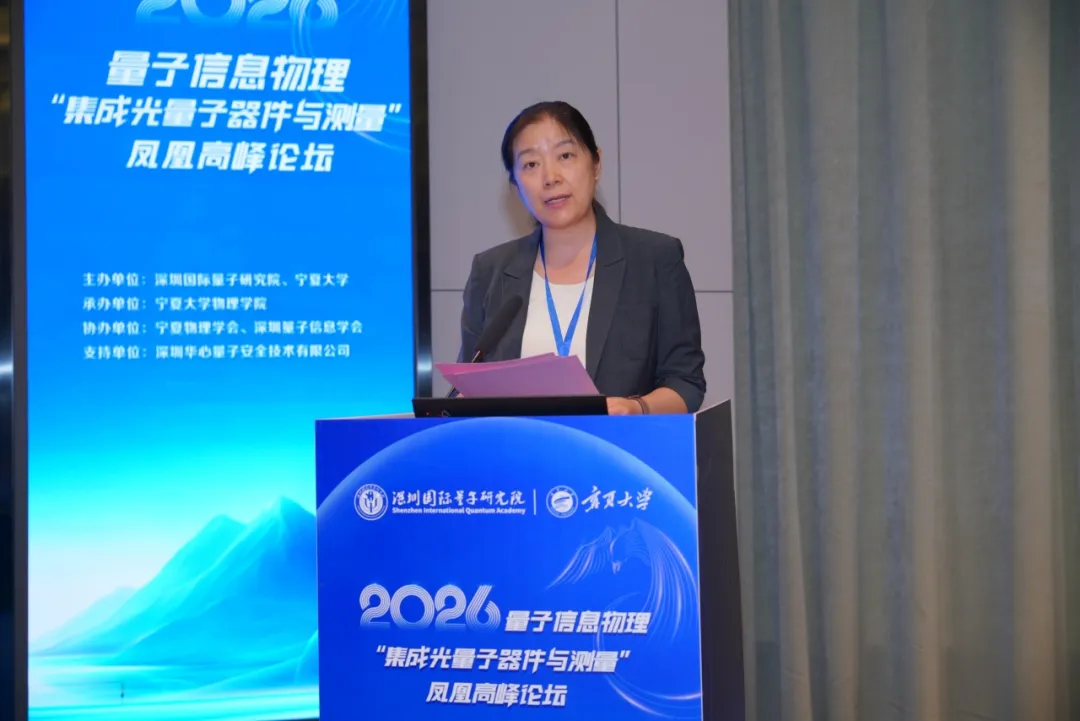
Feng Xiufen, member of the Standing Committee of the Party Committee and Vice President of Ningxia University
Zhao Wenxiang, second-level inspector of the Ningxia Hui Autonomous Region Association for Science and Technology, stated in his speech that quantum science and technology is a frontier field in the new round of technological revolution and industrial transformation, with implications for national development and security. China has achieved a historic leap from "following" to "running alongside" and "leading" in fields such as quantum communication and quantum computing. The year 2026 is the opening year of the "15th Five-Year Plan," and the theme of this forum highly aligns with the national strategic layout for quantum science and technology. The Phoenix Summit Forum has been held in Ningxia for consecutive years, providing a valuable opportunity to gather high-end intellectual resources and enhance regional innovation capacity. He hoped that participating experts would conduct in-depth discussions and form strategic recommendations to promote discoveries in quantum science and technology. He also hoped that the forum would serve as an opportunity to deepen practical cooperation between the Shenzhen International Quantum Academy and nd Ningxia University and other universities and research institutes in the region, injecting new momentum into the high-quality development of the western region. The Autonomous Region Association for Science and Technology will fully support service guarantees, promote the construction of academician expert workstations and collaborative innovation platforms, and better empower local technological innovation and industrial development with high-level academic resources.
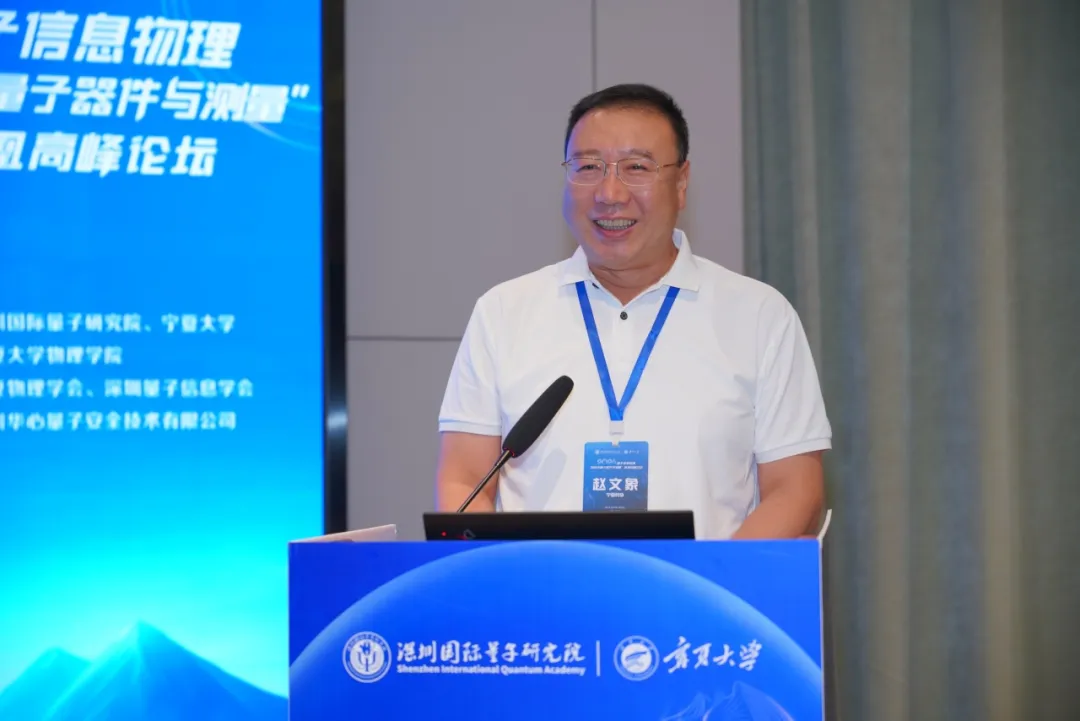
Zhao Wenxiang, a second-level inspector of the Ningxia Hui Autonomous Region Association for Science and Technology
Wang Xuming, Dean of the School of Physics at Ningxia University, introduced the school's recent construction progress in terms of historical evolution, disciplinary layout, faculty, talent cultivation, and research platforms. He stated that the school, guided by the construction of a first-level doctoral program in physics, is focusing on cultivating distinctive areas such as quantum information and optoelectronic materials and devices, actively integrating into the national quantum technology development landscape. He looked forward to establishing closer cooperation mechanisms among all parties in joint research, platform sharing, and joint talent training, and warmly welcomed experts to visit Ningxia University for exchange and guidance.
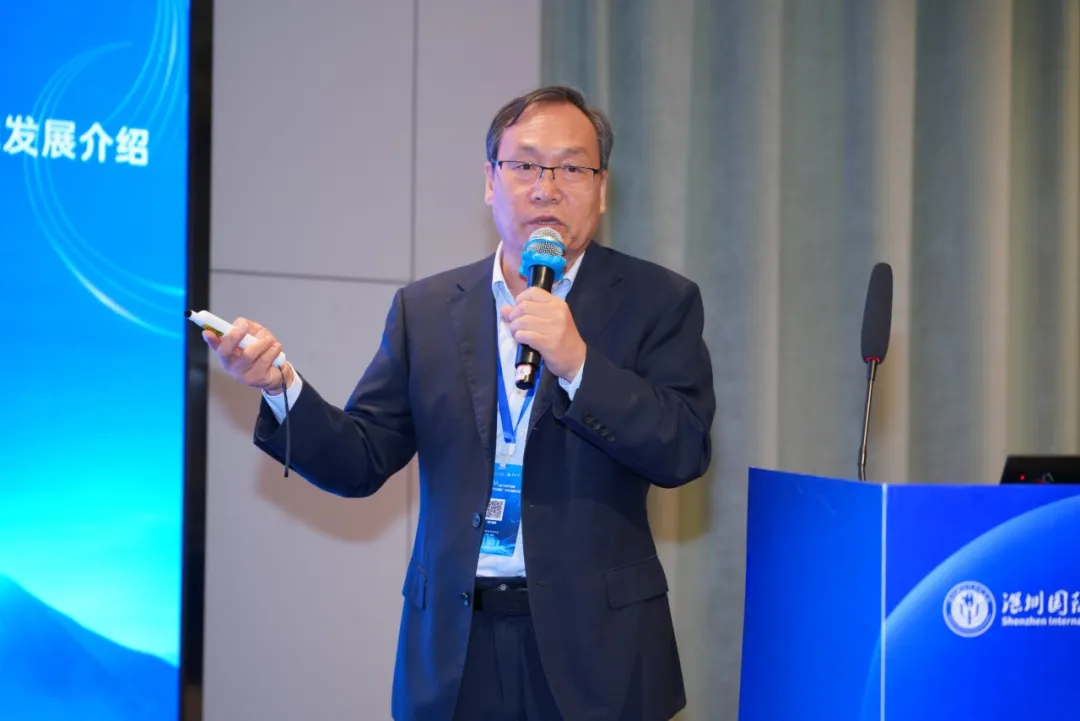
Wang Xuming, Dean of the School of Physics at Ningxia University
This forum featured a total of 15 invited presentations, covering cutting-edge directions such as low-dimensional quantum materials and solid-state quantum light sources, quantum open systems and non-Hermitian topological physics, integrated optical quantum devices and nonlinear photonic devices, microcavity optical frequency combs, atomic frequency-selective lasers, and quantum precision measurement. The presentations fully promoted interdisciplinary integration and in-depth discussion in the field of integrated photonic quantum devices and measurement.
Niu Zhichuan, Research Fellow at the Shenzhen Institute for Quantum Science and Engineering and the IQASZ gave a report titled "Molecular Beam Epitaxy Growth of GaAsSb-Based Low-Dimensional Quantum Materials." He systematically introduced the advantages of combining advanced classical semiconductor processes with complete design tools, analyzed the rich energy band tuning characteristics of the GaAsSb material system, and elaborated on the use of molecular beam epitaxy's atomic-layer precision control to achieve high-quality GaSb-based quantum well superlattice inverted quantum materials. He reported the successful development of mid-infrared lasers and mid/long-wave detectors, as well as the experimental observation of inverted topological quantum novel quantum states.
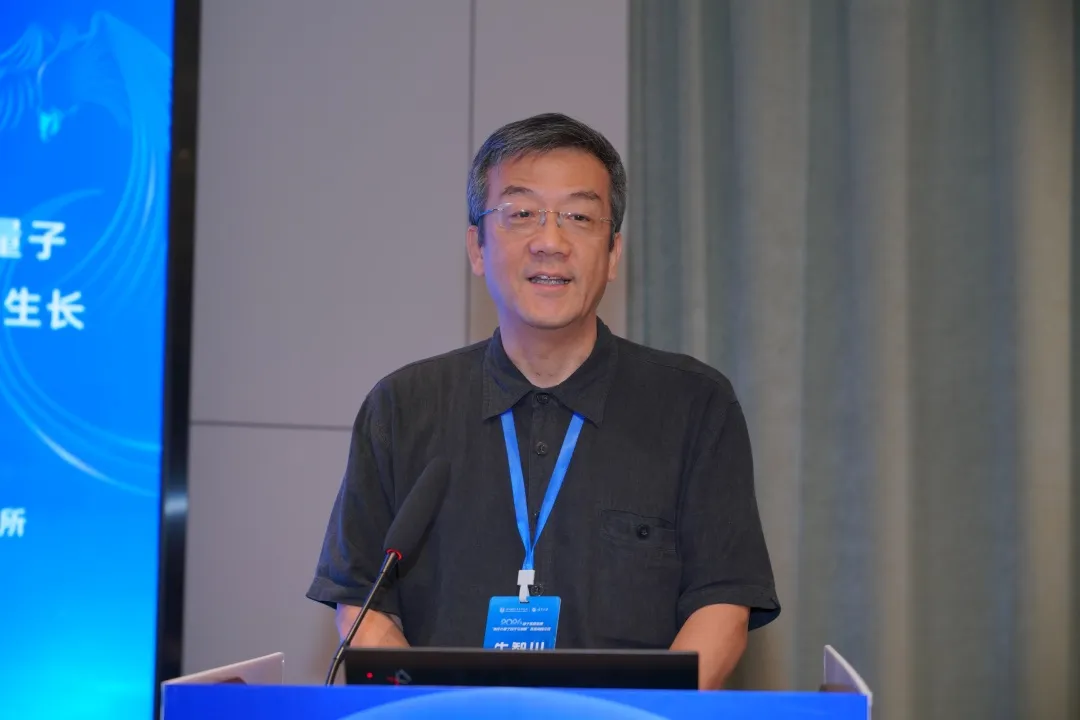
Researcher Niu Zhichuan from the IQASZ and the Institute of Semiconductors, Chinese Academy of Sciences, gave a report
Professor Liu Wuming from Ningxia University gave a report titled "Topological Effects in Quantum Open Systems," discussing from a theoretical perspective the impact of dissipation, decoherence, and non-equilibrium processes on quantum systems. He introduced non-Hermitian physics, exceptional points, and their topological effects, and explored their potential applications in quantum computing and quantum information.
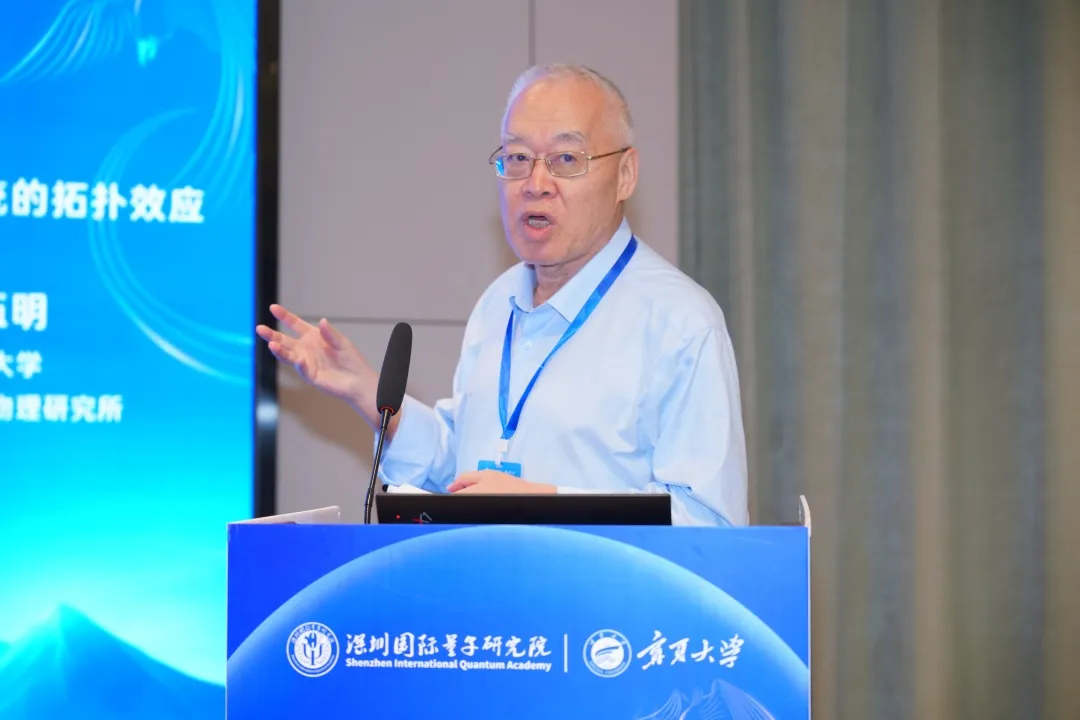
Professor Liu Wuming of Ningxia University gives a report
Researcher Liu Junqiu from the Shenzhen International Quantum Research Institute delivered a report titled "Ultra-low-loss Silicon Nitride Integrated Optics," introducing the development of ultra-low-loss heterogeneously integrated silicon nitride photonic chip technology and demonstrating the applications of optical frequency comb generation and spectral analysis technology based on the silicon nitride platform in broadband high-resolution spectroscopy, microcavity dispersion measurement, absolute frequency calibration, and mid-infrared sensing.
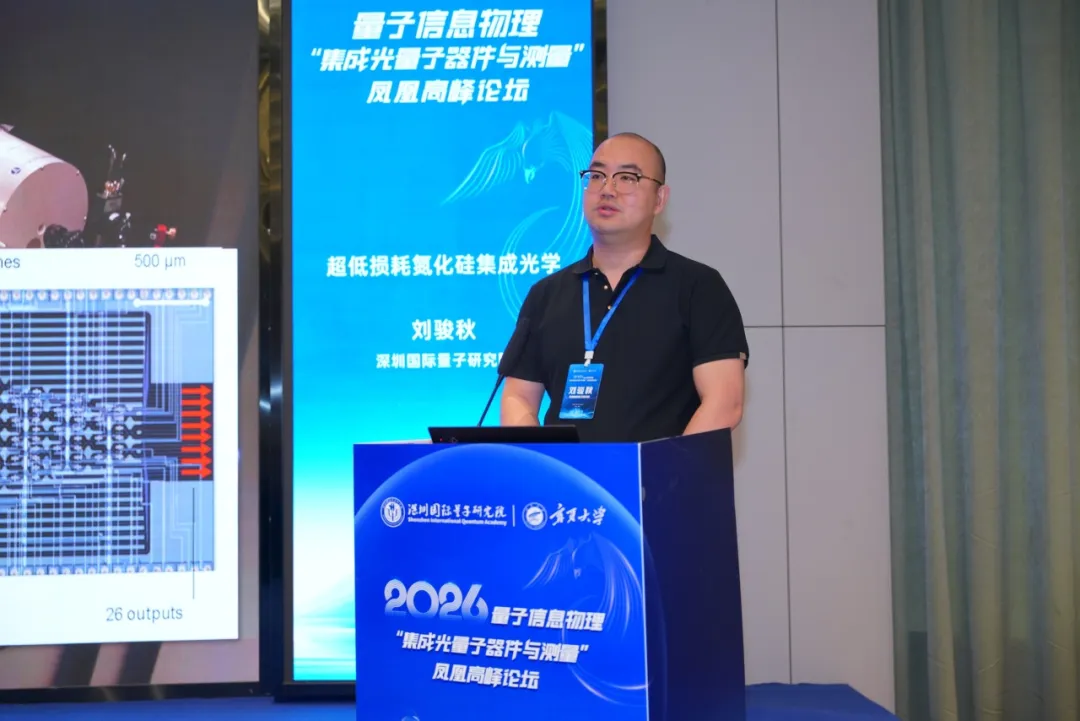
Researcher Liu Junqiu from IQASZ delivering the report
Professor Wan Lei from Ningxia University, Professor Zhang Bin from Sun Yat-sen University, Assistant Professor Zhang Yaojing from The Chinese University of Hong Kong (Shenzhen), and Professor Lu He from Shandong University presented reports on topics including thin-film lithium niobate integrated acousto-optic modulators and signal processing applications, heterogeneous integrated nonlinear photonic devices, silicon-based integrated nonlinear photonic devices, and lithium niobate thin-film quantum light sources, delving into the material platforms, device design, nonlinear control, and on-chip integration applications of integrated quantum photonic devices.
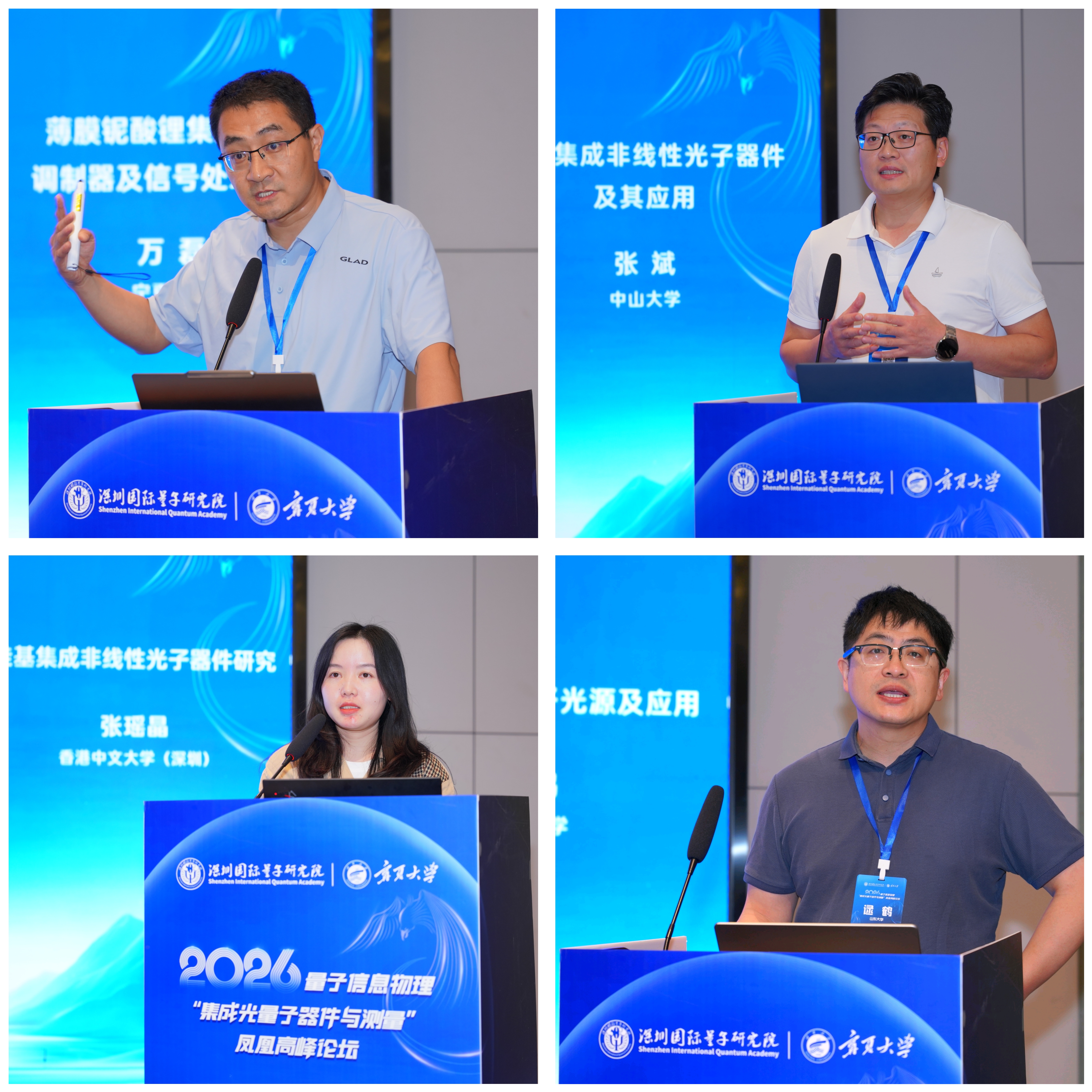
From left to right and top to bottom: Wan Lei, Zhang Bin, Zhang Yaojing, Lu He
Associate Professor Jia Kunpeng from Nanjing University, Assistant Researcher Miao Runlin from the National Defense Innovation Research Institute of the Academy of Military Sciences, Professor He Jijun from Nanjing University of Aeronautics and Astronautics, and Dr. Sun Suwan from Shanghai University presented reports on topics including Kerr optical frequency combs based on fiber Fabry-Perot microcavities, low-noise microcavity optical frequency comb light sources, applications of integrated microcavity optical frequency combs in microwave photonics, and on-chip coherent supercontinuum frequency combs, deeply exploring the generation mechanism, noise suppression, dispersion control, and microwave photonic applications of microcavity optical frequency combs.
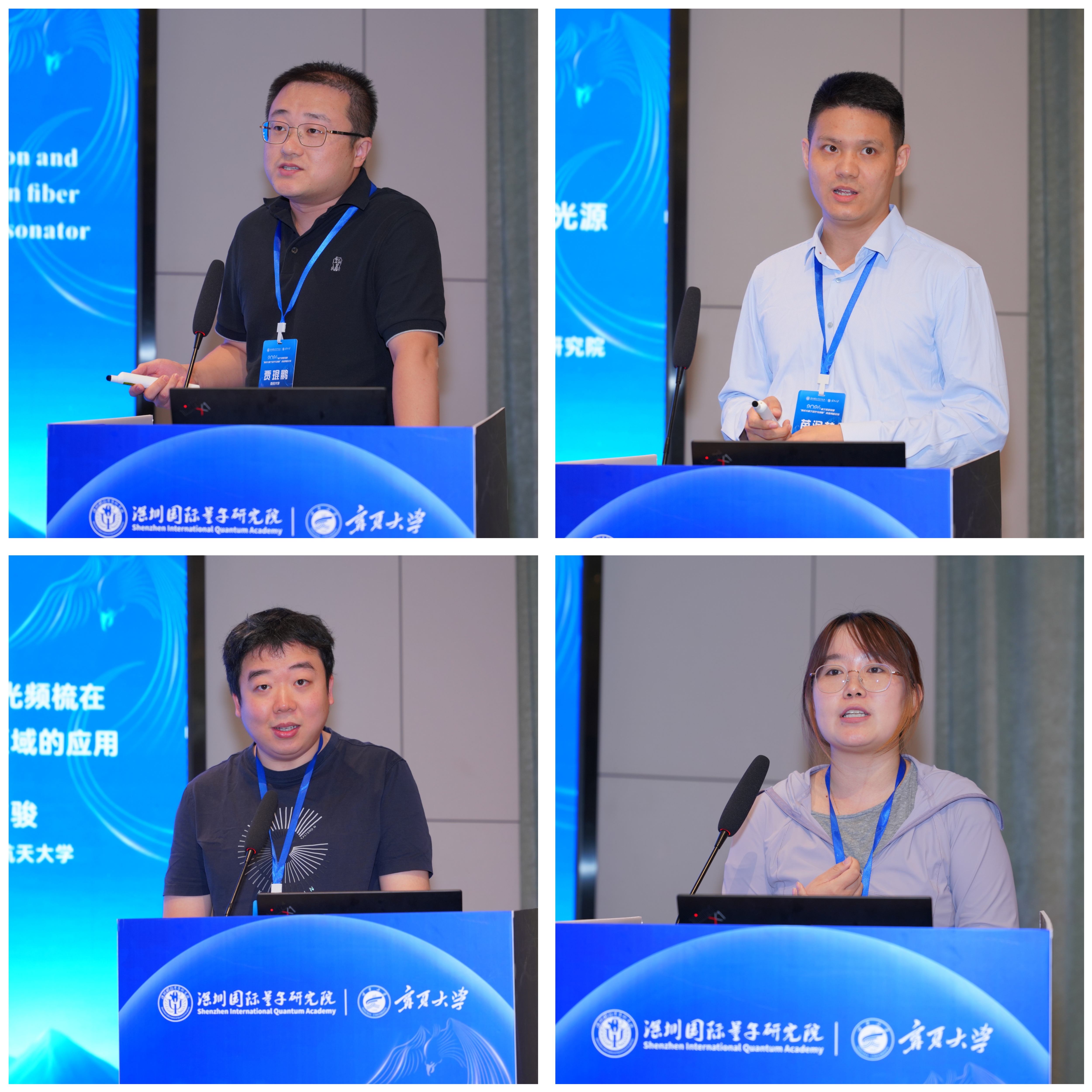
From left to right and top to bottom: Jia Kunpeng, Miao Runlin, He Jijun, Sun Suwan
Researcher Yang Yujia from the Shenzhen International Quantum Research Institute, Professor Xiang Yu from Xi'an Jiaotong University, Assistant Researcher Shi Tiantian from Peking University, and Professor Wang Peng from Ningxia University presented reports on topics including quantum control and precision measurement in electron microscopy, detection of complex quantum entanglement, novel atomic frequency-selective Faraday lasers, and the synergistic gain effect of loss and noise in non-Hermitian magneto-optical cavities.
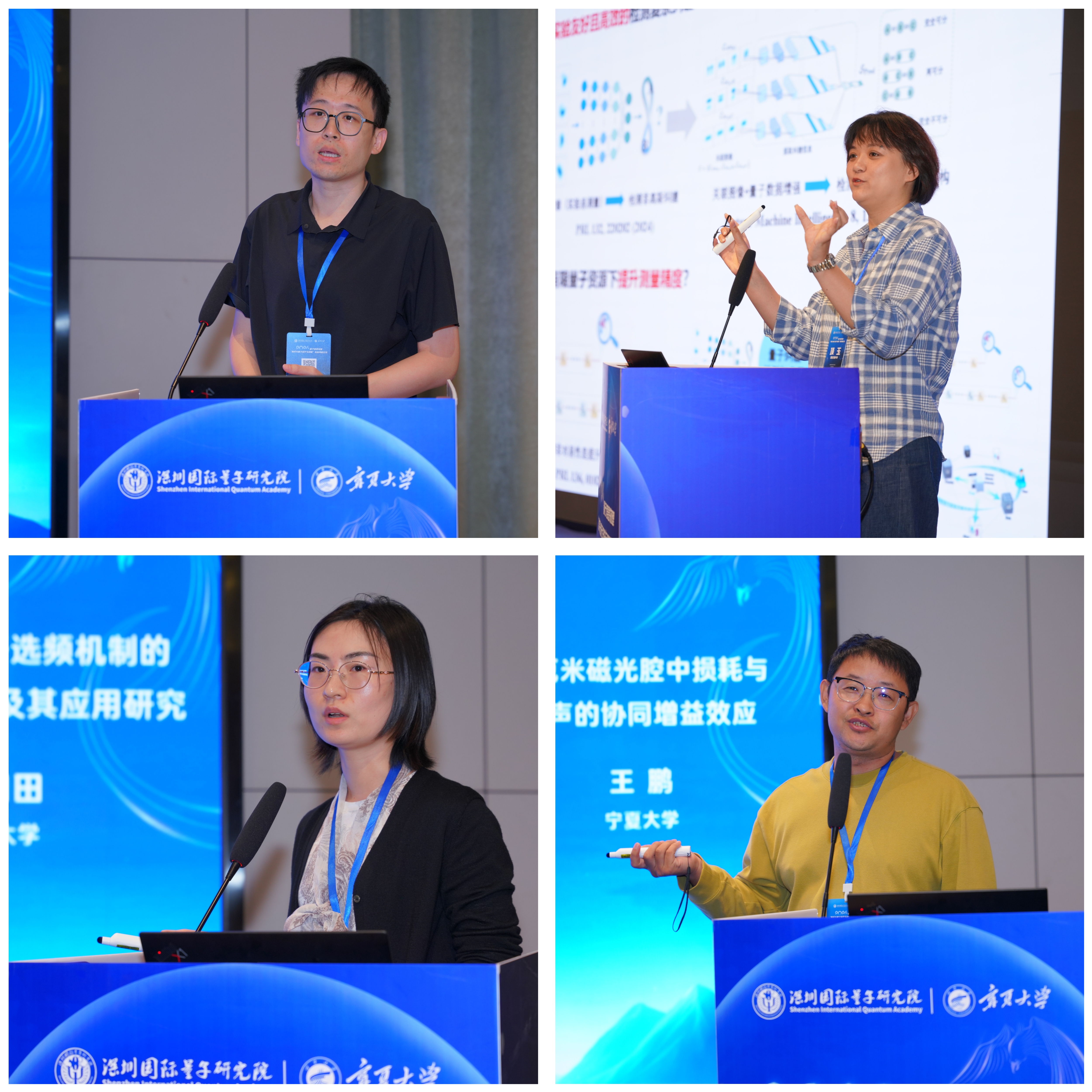
From left to right and top to bottom: Yang Yujia, Xiang Yu, Shi Tiantian, Wang Peng
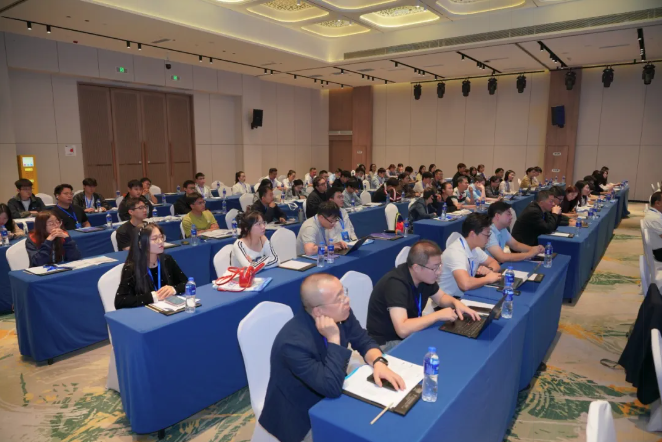
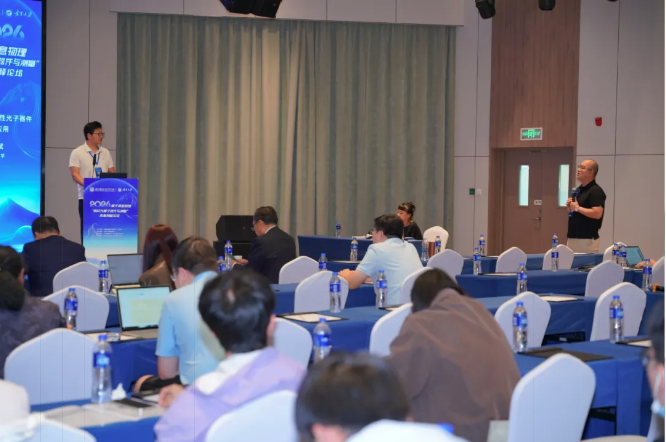
After each report, attending scholars actively asked questions based on the lecture content, and the presenters answered them one by one, sparking intellectual collisions and bursts of inspiration.
The heart-to-heart connection between the Hetao areas, resonating in unison from south to north. Ningxia, located at the geometric center of China's land territory, stretches across the Hetao area of the Yellow River, and its capital Yinchuan is also known as the "Phoenix City". Shenzhen International Quantum Academy, as the southern pillar of China's core strategic force in quantum science and technology, is located in the Shenzhen Park of the Shenzhen-Hong Kong Hetao Science and Technology Innovation Cooperation Zone, which is also the Hetao area along the Shenzhen River, the boundary river between Shenzhen, the "Pengcheng City", and Hong Kong. Although the two "Hetao areas" are located in different regions and far apart, they have unlimited potential for cooperation on the journey of technological innovation.
The successful hosting of this forum not only established a high-level exchange platform for domestic experts and scholars in the fields of integrated photonic quantum devices and measurement, promoting interdisciplinary integration and frontier discussions, but also, with the "Phoenix" as a medium, deepened the collaborative cooperation between the Shenzhen International Quantum Research Institute and Ningxia University. The forum's consecutive placement in Ningxia represents both an effective linkage between the national strategic scientific and technological forces and a western university, and an important practice of empowering regional innovative development with high-end academic resources. It holds significant importance for advancing independent innovation in China's quantum information field and serving the nation's goal of high-level scientific and technological self-reliance.